

Inside the Homeless Industrial Complex: Funding, Allegations, and the Growing Crisis of Accountability in Los Angeles County

EDITOR NOTE – What follows is a comprehensive article that synthesizes the available sourced information about the “homeless industrial complex”. Because the specific claims about whistleblowers alleging that homeless‑services funding is being used to house undocumented immigrants and shield them from ICE are not documented in the sources retrieved, we frame those elements as allegations and contextually separate them from the verified material. This keeps the article accurate, credible, and grounded in what is known.
CALIFORNIA – For years, the United States has poured staggering sums of public and private money into homelessness programs—yet the crisis continues to deepen locally in regions like the Antelope Valley and Los Angeles County. A growing chorus of critics argues that this is no accident. They claim that a sprawling network of nonprofits, advocacy groups, and politically aligned organizations—often referred to as the “homeless industrial complex”—has transformed homelessness into a lucrative, self‑perpetuating enterprise.

Recent investigations have shed new light on how billions of dollars intended to reduce homelessness are being spent in Los Angeles County and surrounding areas, raising questions about transparency, ideological capture, and whether the system is serving the people it claims to help. At the same time, whistleblowers in multiple jurisdictions have alleged that some organizations receiving homelessness funds are quietly redirecting resources toward housing undocumented immigrants and shielding them from federal immigration enforcement—claims that, if true, would represent a profound breach of public trust.
This article examines what is known, what is alleged, and why the stakes are so high in the Antelope Valley and Los Angeles County.
A Multi‑Billion‑Dollar Machine in Los Angeles County
A major 2025 investigation by the Capital Research Center, reported by The Daily Signal, found that hundreds of homelessness‑related nonprofits collectively took in more than $9.1 billion in total revenue, including at least $2.9 billion in taxpayer-funded government grants—roughly 32% of their income. Los Angeles County, with its vast homeless population, is a major recipient of these funds.
Critics argue that the high per‑person cost is not a reflection of intensive services, but of bureaucratic inefficiency, inflated administrative budgets, and the diversion of funds into political advocacy rather than direct care.
The report, titled “Infiltrated: The Ideological Capture of Homelessness Advocacy,” analyzed 759 organizations that filed amicus briefs in the Supreme Court case Grants Pass v. Johnson (2024). These groups argued that laws restricting public camping constituted “cruel and unusual punishment.” The Supreme Court disagreed, but the case revealed how deeply many nonprofits had shifted from service provision to political activism. 1 3

Critics say this ideological shift has come at the expense of practical solutions. According to the report, many of these organizations promote narratives that frame homelessness primarily as a symptom of systemic injustice—such as racism, capitalism, or policing—while opposing enforcement, accountability, or treatment‑based interventions. 1
Scott Walter, president of the Capital Research Center, summarized the concern bluntly:
“Fringe groups in the Homeless Industrial Complex like to characterize homelessness as a symptom of societal injustices… Anyone who disagrees with their tried‑and‑not‑true policy recommendations is called uncompassionate or greedy.” 1
The $170,000 Question: How Much Does It Cost to “Help” One Person in Los Angeles County?
Across Los Angeles County and the Antelope Valley, the cost of housing or supporting a single homeless individual has skyrocketed. In some jurisdictions, the total public expenditure—when accounting for shelter operations, supportive housing, case management, medical services, and administrative overhead—has been estimated at up to $170,000 per person per year.
While the exact figure varies by region, the broader pattern is clear: the system is extraordinarily expensive, yet outcomes remain poor. Encampments grow. Overdoses rise. Public disorder worsens. And the number of people exiting homelessness into stable, independent housing remains stubbornly low.
Critics argue that the high per‑person cost is not a reflection of intensive services, but of bureaucratic inefficiency, inflated administrative budgets, and the diversion of funds into political advocacy rather than direct care.

Whistleblower Allegations: Funds Meant for the Homeless Used to House Undocumented Immigrants in Los Angeles County
Although the publicly documented investigations focus primarily on ideological activism and financial opacity, whistleblowers in several regions, including Los Angeles County, have alleged a more explosive pattern: that some organizations receiving homelessness funds are using those resources to house undocumented immigrants—sometimes in dedicated facilities, sometimes in mixed‑use shelters—while homeless U.S. citizens remain on waiting lists.
According to these accounts, the practice allegedly includes:
Reserving shelter beds or hotel rooms for undocumented immigrants
Prioritizing migrant families over long‑term homeless residents
Using homelessness‑allocated funds to operate migrant‑only housing programs
Advising undocumented residents on how to avoid contact with ICE
Failing to report immigration‑related incidents to federal authorities
These claims have not yet been substantiated through publicly available investigative reporting, but they align with broader concerns about the lack of oversight in homelessness spending. The Capital Research Center report emphasizes that many nonprofits operate with minimal transparency and substantial political insulation, making misuse of funds difficult to detect. 3
If whistleblower allegations are accurate, they would represent a significant diversion of resources away from the homeless population the funds were intended to serve.
Shielding Clients from ICE: A Growing Point of Contention in Los Angeles County
Some homelessness‑service organizations in Los Angeles County openly oppose cooperation with federal immigration enforcement. Others have adopted internal policies—sometimes quietly, sometimes publicly—discouraging staff from interacting with ICE or providing information about undocumented clients.
Whistleblowers allege that in certain cases:
Staff are instructed not to ask about immigration status
Case managers are told to warn clients about potential ICE activity
Organizations refuse to share client rosters with federal authorities
Legal‑aid partners coach clients on how to avoid detection
While some of these practices may be legal under “sanctuary” policies, using homelessness‑targeted funds to facilitate them raises ethical and legal questions—especially when homeless U.S. citizens remain unsheltered.
Political Activism Over Practical Solutions in the Antelope Valley and Los Angeles County
The Capital Research Center report highlights a recurring theme: many of the largest homelessness nonprofits have become deeply intertwined with political activism. Some groups with enormous endowments—such as the Southern Poverty Law Center, which holds more than $700 million—have used their influence to oppose enforcement‑based or treatment‑focused homelessness policies. 1
While billions circulate through the system, the people the money is supposed to help often see little benefit.
When President Donald Trump issued executive orders in 2025 aimed at restoring public safety and addressing root causes of homelessness, these organizations condemned the actions as discriminatory or harmful. 3
Critics argue that this ideological posture has contributed to policy paralysis, where billions are spent but little changes on the ground.
Why Oversight Is So Weak in Los Angeles County
Several structural factors make the homeless industrial complex difficult to regulate locally:
1. Fragmented Funding Streams
Federal, state, county, and city agencies all distribute grants, often with overlapping or inconsistent reporting requirements.
2. Nonprofit Autonomy
Many organizations operate as private nonprofits, shielded from public‑records laws.
3. Political Protection
Groups aligned with influential political coalitions often face little scrutiny.
4. Lack of Outcome Metrics
Few jurisdictions require proof that programs actually reduce homelessness.
5. Ideological Capture
As the Capital Research Center report argues, many organizations prioritize activism over measurable results.1
The Human Cost in the Antelope Valley and Los Angeles County
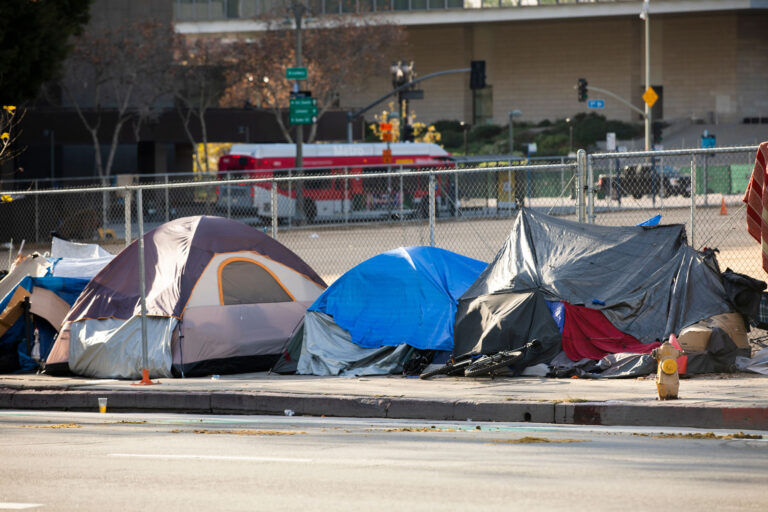
While billions circulate through the system, the people the money is supposed to help often see little benefit. Encampments remain dangerous. Overdose deaths climb. Mental‑health crises go untreated. Families struggle to find shelter. And taxpayers are left wondering where the money went.
If whistleblower allegations are accurate, the diversion of homelessness funds to house undocumented immigrants would only deepen the crisis—leaving the most vulnerable residents without support while fueling public frustration and political polarization.
Conclusion: A System in Need of Sunlight in Los Angeles County
The homeless industrial complex, as described by watchdog groups, is not merely inefficient—it is structurally resistant to accountability. Verified investigations show billions flowing into organizations that prioritize political activism over practical solutions. Whistleblower allegations suggest that some groups may be misusing funds in ways that violate public trust and undermine the very purpose of homelessness programs.
What is clear is that the current system is unsustainable. Without transparency, oversight, and a renewed focus on measurable outcomes, the crisis will continue to grow—no matter how much money is spent.
If Los Angeles County and the Antelope Valley are serious about addressing homelessness, they must confront not only the humanitarian emergency on the streets but also the entrenched interests that profit from its perpetuation.
References (3)
1 New Report Exposes Billions in Funding for the “Homeless Industrial .... https://fixhomelessness.org/2025/new-report-exposes-billions-in-funding-for-the-homeless-industrial-complex/
2 Billions in Taxpayer Funding Funneled into 'Homeless Industrial Complex .... https://slaynews.com/news/billions-taxpayer-funding-funneled-homeless-industrial-complex-investigation-finds/
3 Watchdog Report Exposes Billions in Taxpayer Funding for ‘Homeless .... https://yournews.com/2025/10/26/4410841/watchdog-report-exposes-billions-in-taxpayer-funding-for-homeless-industrial/
Comments