

Beyond the Stereotype: What I Saw During LA County’s Homeless Count

Jan 27
5 min read
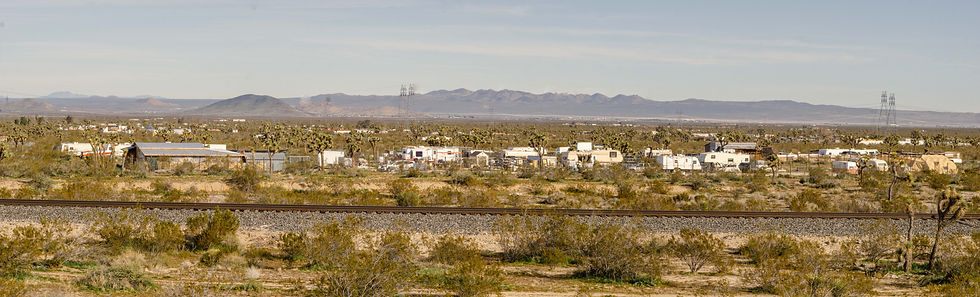
PEARBLOSSOM, CA – From January 20th to 22nd, Los Angeles County conducted its annual homeless count. This entails a massive effort involving agencies and volunteers across the region, including LAHSA, MHALA, Lancaster Sheriff’s Station, Lancaster PD, and countless community members who gave their time to help capture a clearer picture of homelessness in our neighborhoods.
On Tuesday, January 20, I had the opportunity to ride along with Christopher Minsal, President of the Pearblossom Rural Town Council. Together, we covered more than 80 square miles as part of the count.
What I saw that day changed me.
A Shift in Perspective
I used to believe homelessness fit into a narrow frame, a shopping cart, a street corner, a passing glance through a windshield. Those scenes are real. But they barely scratch the surface of what I witnessed: a complex, human landscape shaped by circumstance, policy, and survival.
Driving through Lancaster, Palmdale, Pearblossom, and the surrounding desert communities, you can’t help but notice people sleeping on sidewalks or living in tents. But we also encountered families living in RVs, individuals in makeshift shelters, and some surprisingly elaborate setups tucked far off the main roads. Every one of these situations came from a different walk of life. There is no single story here.
Some individuals are battling addiction. Others are caught in bureaucratic limbo. Many are simply priced out of traditional housing.
Living Without an Address
One issue that surfaced again and again was housing without addresses.
In much of LA County, living off grid is illegal unless a property was grandfathered in decades ago. Some people have legally purchased land but cannot obtain an address because the cost of permits and infrastructure, power, water, sewer, and trash service, is simply too high. Other parcels are so remote that bringing in utilities becomes financially impossible.
Without an address, everything becomes harder. Emergency services struggle to locate people during fire or medical calls. Law enforcement faces delays reaching remote properties. Even basic services become inaccessible. Some landowners allow others to stay on their property for a small fee, but that doesn’t solve the underlying issues; it often compounds them.
Environmental Impact and Limited Resources
These challenges ripple outward.
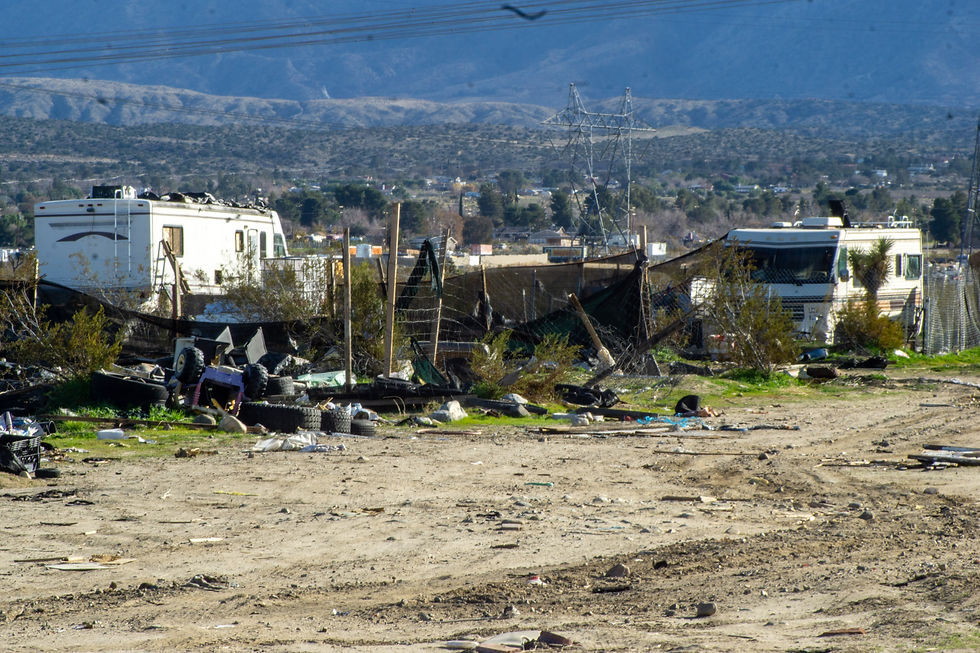
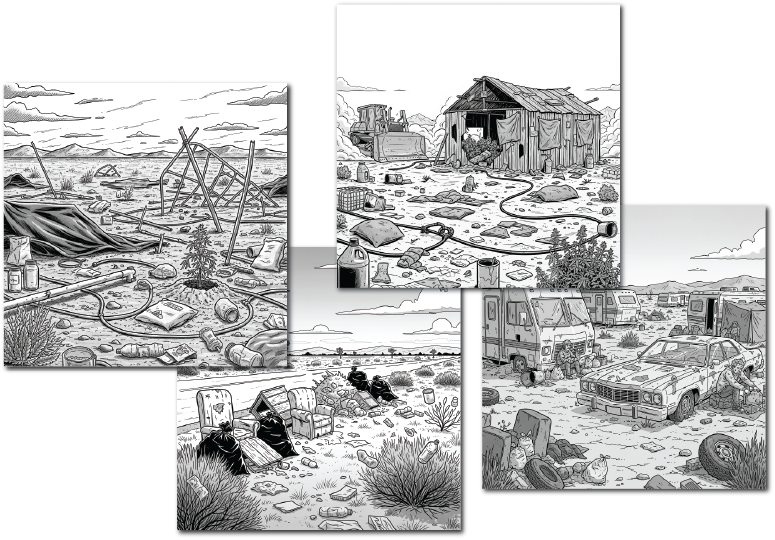
We saw piles upon piles of trash scattered across the desert: paper waste, furniture, broken appliances, and even human waste. Illegal dumping is not just an eyesore, it damages fragile desert ecosystems and threatens surrounding communities. As more people move into unincorporated or underserved areas without formal infrastructure, the strain on the environment grows.
Part of the problem is that much of this is complaint driven. With limited resources and not nearly enough code enforcement officers to cover such a massive rural area, many situations only come to light when residents report them. Even then, response times can be slow, not because people don’t care, but because there simply are not enough boots on the ground to keep up.
The Financial Reality
There is also a financial reality many don’t consider.
Property taxes are a core revenue source for local services. Cities rely on them to fund police, fire protection, road maintenance, parks, libraries, and schools. When population increases without corresponding property tax growth, municipalities are left trying to serve more people with fewer resources. That imbalance puts pressure on everyone.
The solutions are not simple, and they will not come from one sweeping policy.
Many Stories, Not One
Of course, substance abuse is part of this picture, but it is far from the whole story.
Some individuals are battling addiction. Others are caught in bureaucratic limbo. Many are simply priced out of traditional housing. Some people I spoke with had come from third world countries, where living with very little was simply normal. For them, being here, even without traditional housing, still means access to programs, the ability to own a vehicle, and enough food to get by. In their eyes, it is a step forward, even if it doesn’t look that way to most of us.
Others are making heartbreaking tradeoffs, sacrificing an apartment so they can afford groceries, gas, or basic necessities, doing everything they can to take care of their families under impossible circumstances.
Searching for Solutions

The solutions are not simple, and they will not come from one sweeping policy.
Is it easier permitting processes?
More shelters or designated camping areas?
Small scale communities with tiny homes?
Better access to IDs and basic documentation?
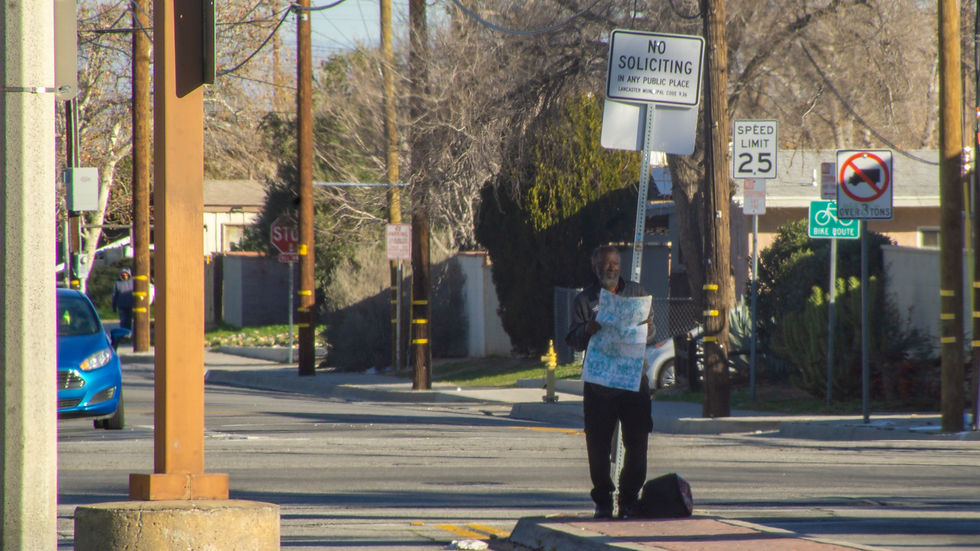
People I spoke with on the street shared how difficult it is just to take the first step forward. One man told me he couldn’t afford the fee to get an ID, which meant he couldn’t access a free phone, apply for services, or even reliably stay in touch with outreach workers. He also believed there simply are not enough shelters or available resources.
That same man also admitted something many don’t want to talk about. When trash services get locked up or become inaccessible, some people resort to theft just to survive. Not out of malice, but out of desperation.
It is an uncomfortable truth, but it is part of the reality on the ground.
Whatever the answers may be, one thing is clear, the problem is not going away. In many areas, it is getting worse.
Displacement Is Not Resolution
We also passed areas that had been massive encampments just last year, now largely cleared. Whether that is a sign the system is working, or simply that people have been pushed farther out or closer to main roads, is hard to say. What is clear is that displacement does not equal resolution.
And this is not just a problem for Pearblossom alone.
When resources are limited in rural areas, people move. When crime increases or enforcement changes in one area, populations shift. What happens in Pearblossom does not stay in Pearblossom – it moves toward Lancaster, Palmdale, and beyond. Homelessness in the rural desert is not an outlier issue, it is an Antelope Valley issue.
Looking Forward
Whatever the answers may be, one thing is clear, the problem is not going away. In many areas, it is getting worse.
The homeless count is not just about statistics. It is about visibility. It is about acknowledging people who are often overlooked and understanding systems that are quietly breaking down. What I witnessed was not just hardship, it was a web of legal, economic, environmental, and human challenges all intersecting in real time.
This is not someone else’s issue. It is happening in our neighborhoods, our deserts, and our streets.
And if there is one takeaway from that long day covering 80 square miles, it is this: Homelessness is not a single problem with a single solution. It is many stories layered together. Until we are willing to see all of them, real progress will remain just out of reach.
Brian Lawrence is a staff reporter and editor with Antelope Valley News.
Comments